
Hello and welcome to the second article of the F1’s Failed Talents series, a series where I take a look at the careers of drivers who had obvious speed when they arrived in Formula One, but for certain reasons, some being out of their control, they ended up disappearing from the sport before their talent could be fulfilled. In this article, I will be looking at the career of Frenchman Jean-Eric Vergne, commonly known as JEV. A driver who spent 3 seasons in Formula One driving for Toro Rosso.
A career retrospective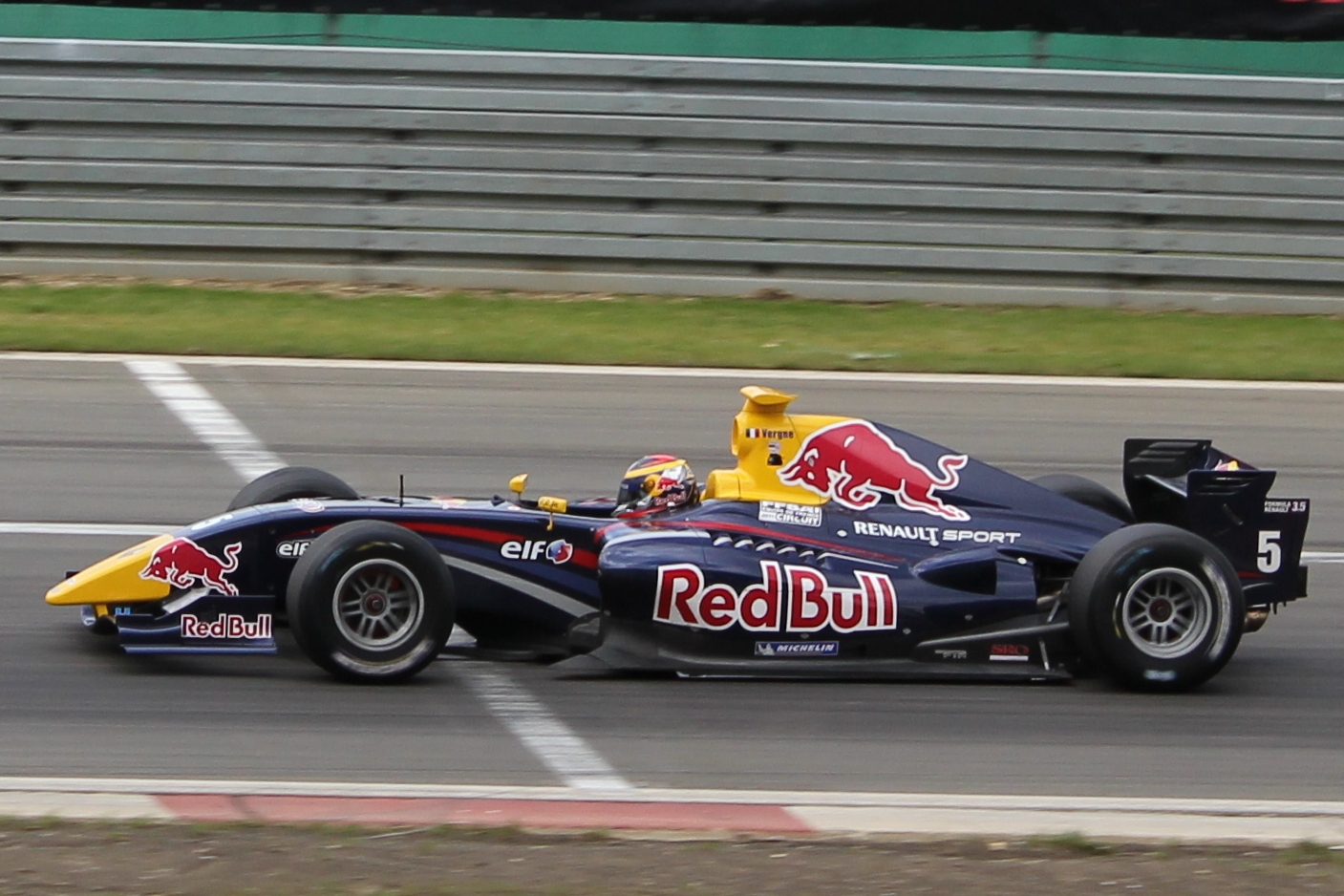
Jean-Eric Vergne competed in his first season of car racing in 2007 at the age of 17. He competed in the Formula Campus Renault championship, and immediately made his mark by winning his first season of car racing. This grabbed the attention of the Red Bull junior programme, and he ended up becoming a member of the programme for the following season. He spent the next 2 seasons in both the Formula Renault Eurocup and the Formula Renault 2.0 WEC series. In 2008, he finished in sixth in the Eurocup and fourth in the WEC series. A year later he finished in second in both championships, before winning the British Formula 3 championship in 2010. He had intended to move to the Formula Renault 3.5 series for that season, but his team pulled out last minute and he was unable to secure another seat. He would enter that series in 2011, and he finished in the runners up spot with 5 victories, finishing just 9 points behind that season’s champion Robert Wickens. He had done enough to impress the Red Bull programme, and in 2012 he was handed his Formula One chance with Toro Rosso, alongside fellow Red Bull junior graduate, Daniel Ricciardo.

Jean-Eric Vergne made his Formula One debut in 2012, and started well, finishing in eleventh on his debut, before scoring his first career points in Malaysia, with an eighth place finish. It would prove to be a relatively quiet season for the French driver, mainly as his Toro Rosso team were kind of in no man’s land, being a little off the pace of their midfield rivals, such as Sauber, Force India and Williams, but clear of the backmarker teams Caterham, Marussia and HRT. But JEV would have a respectable rookie season, finishing in the points on four occasions, with eighth place finishes in Malaysia, Belgium, Korea and Brazil. He ended the season in seventeenth with 16 points. He outscored his slightly more experienced team-mate Daniel Ricciardo by six points. 2013 would prove to be a better year for Toro Rosso, with a car that was more regularly on par with midfield rivals. Jean-Eric Vergne would start the season well, with a tenth place finish in Malaysia, an eighth in Monaco, and then a career-best sixth in Canada. But from then on the season did not go to plan, as he would score no further points. Part of that was due to a fair share of bad luck. He ended the season in fifteenth, seven points behind his team-mate Daniel Ricciardo. He would be dealt a further hammer blow when the senior Red Bull team opted to promote Daniel rather than himself.
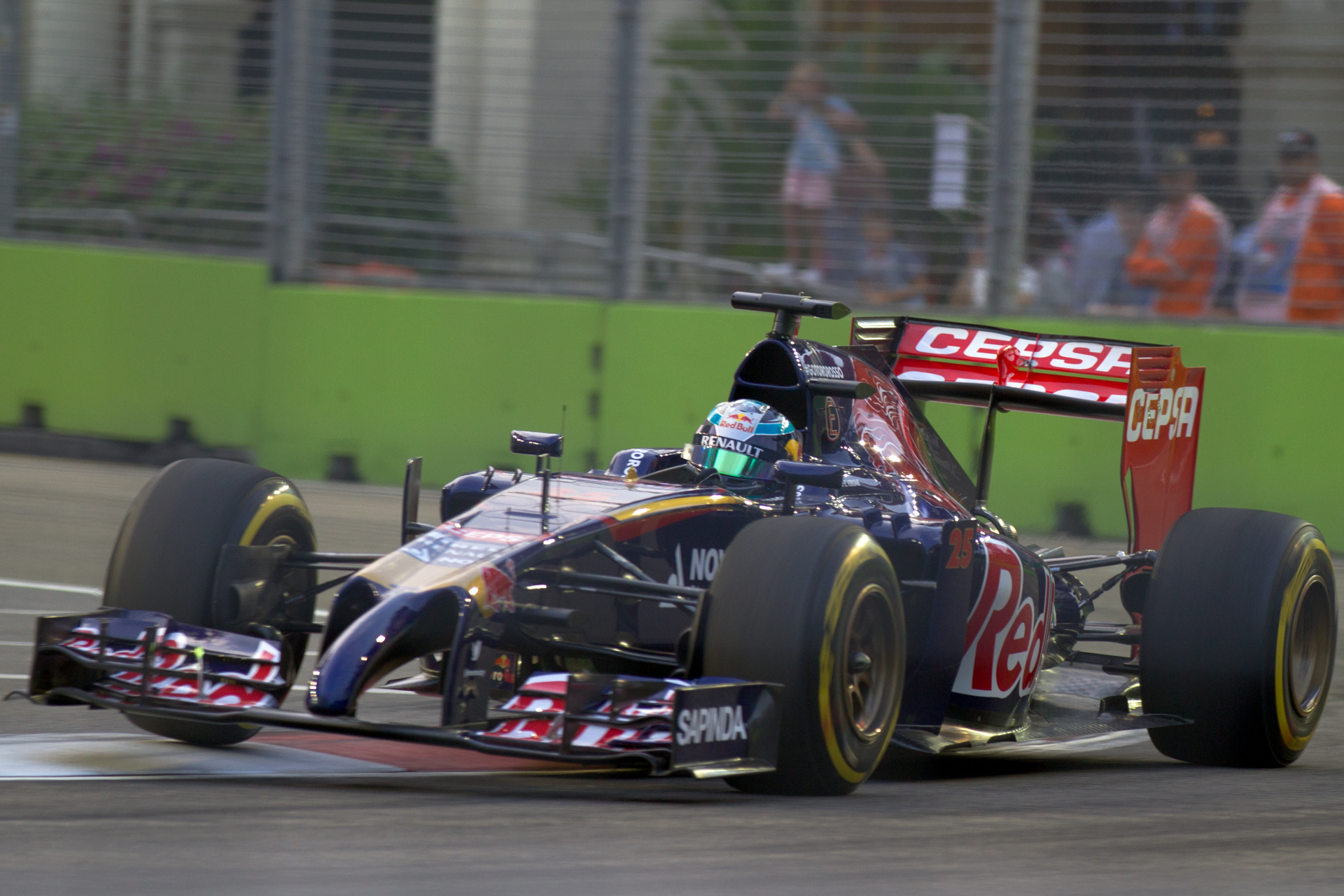
For 2014, he would remain at Toro Rosso for the first year of the new hybrid era. This was a crucial year for him as drivers did not typically last more than three years at the junior team. 2014 saw Toro Rosso change from Ferrari to Renault power. And there was clear progress. The team was regularly on the outskirts of the points scoring positions, which enabled the Frenchman to showcase his skills. He immediately got off the mark with an eighth place finish in Australia, and despite some poor reliability, the results started to come. He would score points on seven occasions during the season, with his best result coming in Singapore, where he fought his way to sixth in the closing laps. He would finish the season with 22 points, finishing in thirteenth place. He did however have the issue of being alongside rookie Daniil Kvyat, who was putting in some impressive drives in his rookie season, and despite only scoring 8 points was getting a lot of the attention. This resulted in Jean-Eric Vergne being overlooked despite the fact he was delivering the results.
As mentioned before, drivers did not typically last more than three years at Toro Rosso. Jean-Eric Vergne did deliver the results, but it is a known fact that the Red Bull Junior programme is brutal, and if drivers can’t progress from the junior team, they are often dropped for the next rookie in line. And sure enough, in August it was announced that Max Verstappen would drive for Toro Rosso in 2015 alongside Daniil Kvyat, with the Frenchman making way. But then Sebastian Vettel announced he was leaving Red Bull for Ferrari. Daniil Kvyat was subsequently confirmed as Red Bull’s second driver, leaving a seat free at Toro Rosso, and leading to hope that the Frenchman might keep his seat after all. But he would be once again pushed aside, as Carlos Sainz Jr would take that vacant seat, leading Jean-Eric Vergne without a drive for 2015.
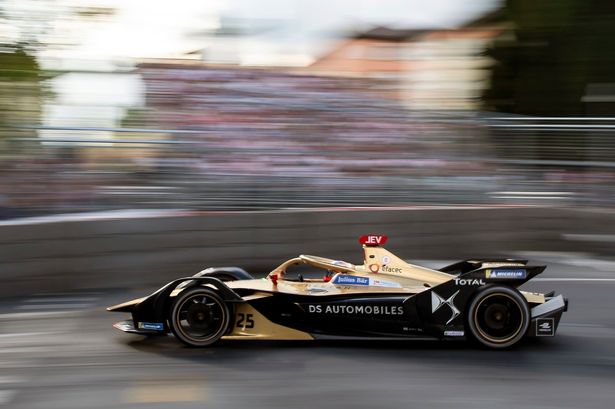
Jean-Eric Vergne would join Ferrari as a test and development driver in 2015, a role in which he remained until the beginning of 2017. After the Abu Dhabi Grand Prix in 2014, still angry at his dismissal from Toro Rosso, he moved to the Formula E series with Andretti Autosport. He took pole on his Formula E debut in Uruguay, and was a consistent front runner. He would move to the DS Virgin team for the 2015-16 season, which would prove to be a difficult one for the Frenchman. However the following season he would find a home at Techeetah, and from then on he showed what Formula One may have missed out on. He took his maiden victory at the season finale in Montreal, which would lay the foundation for the 2017-18 season. Taking 4 wins and finishing in the top five in every race bar one, he would take the title and become the series’ fourth champion. Despite a change to the Gen2 car, Jean-Eric Vergne would defend his crown in a crazy season, which saw him take charge in the closing races.
What went wrong?
I think Jean-Eric Vergne is a textbook victim of the brutal Red Bull Junior programme. He did not actually do much wrong in his three years in F1. He did the job for the team and was pretty much on the pace of Daniel Ricciardo when he was his team-mate. But when Daniel was promoted to the senior team instead of him, I believe it was clear that his fate was to be another victim of the Red Bull programme. By his final season in Formula One, attention was on the next rising Red Bull junior, and he was on borrowed time despite delivering the results. I believe he could’ve done a similar job to Daniel Ricciardo had it been him that was promoted to the senior team. His performances in Formula E are showing what could’ve been had he been given more of a chance in Formula One.
 RaceWeek